Understanding What Those Percentages Really Mean for Your Academic Work
If you’ve recently submitted a paper through Turnitin and noticed a new metric labeled “AI Writing” or “AI Generation,” you’re not alone. This groundbreaking feature, introduced in 2023, has revolutionized how educational institutions detect AI-generated content. But what do those percentages actually mean? Let’s dive deep into understanding the Turnitin AI detection scoring system.
How Turnitin AI Detection Works
Turnitin’s AI detection system employs sophisticated machine learning algorithms trained on millions of human-written and AI-generated text samples. Unlike traditional similarity checks that compare your work against a database of existing content, AI detection analyzes linguistic patterns, writing flow characteristics, and statistical anomalies that typically distinguish human writing from machine-produced text.
The system examines factors such as:
- Burstiness: The variation in sentence length and structure
- Perplexity: How unpredictable or “random” the text appears
- Lexical diversity: The range and variation of vocabulary used
- Syntactic patterns: How sentences are constructed and connected
The 0-100% Score Breakdown Explained
0-20%: Likely Human-Written
A score in this range suggests that the analyzed text exhibits strong human writing characteristics. These documents typically display:
- Natural variation in sentence length and complexity
- Personal voice and unique phrasing
- Occasional grammatical imperfections
- Contextual reasoning that flows organically
What it means: Your instructor will likely see this as authentically human work. However, remember that heavily edited or formulaic writing (common in scientific abstracts) might still register some AI indicators even if genuinely human-written.
21-50%: Mixed Human and AI Content
This ambiguous zone requires careful interpretation. Your document may contain:
- Predominantly human writing with some AI-assisted sections
- Human work that was significantly edited by AI tools
- AI-generated content mixed with original human-written material
- Template-based writing that mimics AI patterns
What it means: This is where interpretation becomes crucial. Educators often look at specific highlighted passages rather than the overall percentage. This score doesn’t indicate wrongdoing—it simply suggests the document warrants a closer look.
51-75%: Significant AI Indicators
Documents in this range show substantial characteristics of AI-generated text:
- Highly uniform sentence structures
- Predictable paragraph organization
- Generic vocabulary choices
- Lack of personal anecdotes or unique perspectives
What it means: If your work falls here, you should be prepared to discuss your writing process with instructors. This doesn’t automatically mean academic misconduct, but it does raise questions that require explanation.
76-100%: Likely AI-Generated
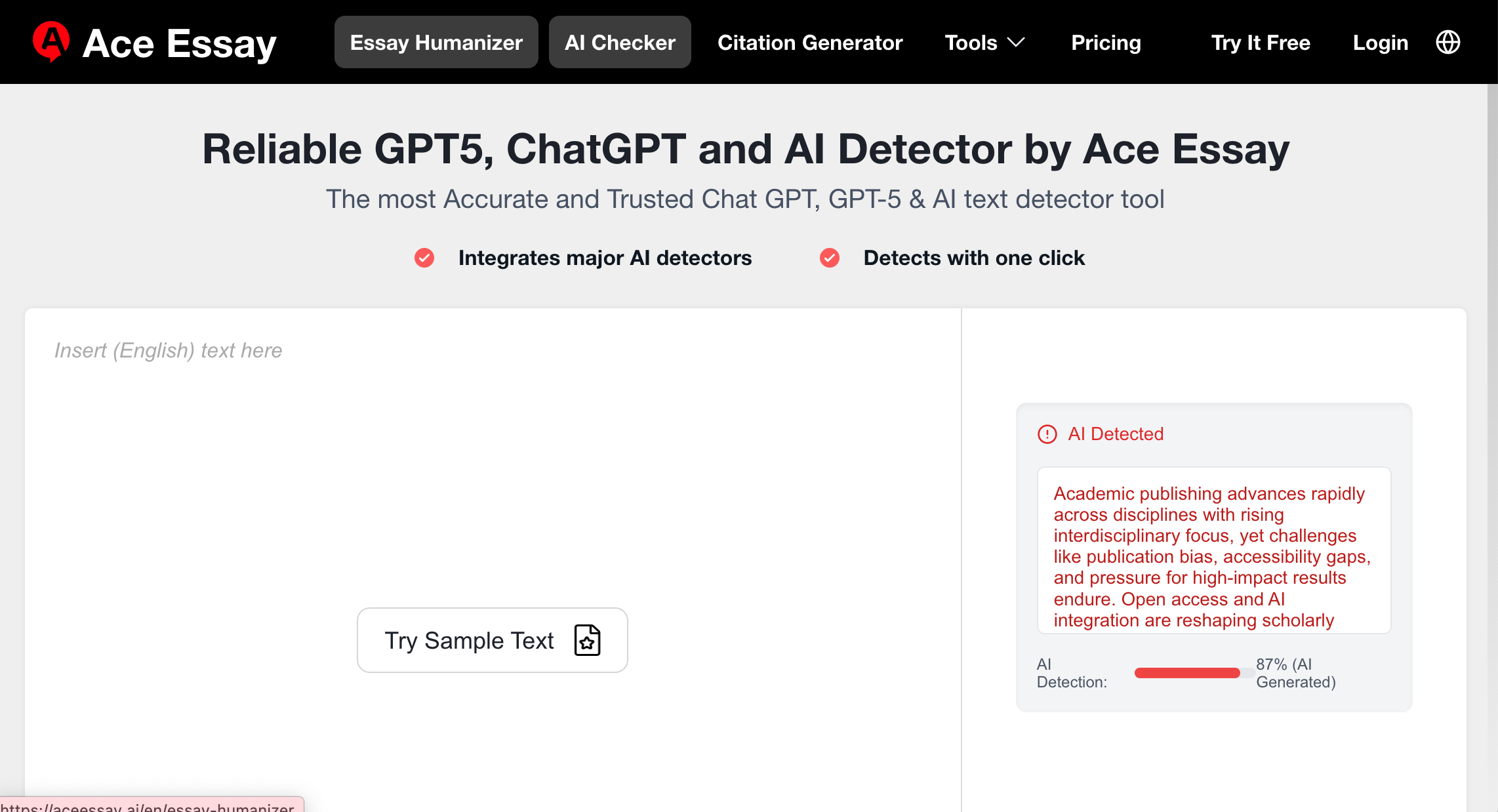
A high percentage strongly suggests that substantial portions of the text were likely produced by AI tools like ChatGPT, Claude, or similar systems. These scores typically appear when:
- Large sections show formulaic structures
- Content lacks depth or original research
- Writing lacks personal voice entirely
- Information is presented generically without critical analysis
What it means: In most academic settings, this score would trigger a formal review process. Students are typically asked to explain their process, provide drafts, or demonstrate their understanding of the submitted material.
Key Factors That Affect AI Detection Accuracy
Understanding what influences these scores can help you interpret and respond appropriately:
1. Writing Style
Highly structured, formal writing in certain fields (like scientific papers) may naturally register higher AI indicators simply because it follows established conventions.
2. Editing and Revision
Multiple rounds of editing, especially with AI grammar tools, can introduce AI-like patterns without changing the fundamental authorship.
3. Translation Effects
Non-native English speakers’ work may sometimes register differently due to more uniform, carefully constructed sentences.
4. Content Type
Technical writing, lab reports, and certain formulaic assignments often score higher simply due to their predictable structure.
What To Do If You Receive a High AI Score
If your submission receives an unexpectedly high AI detection percentage, don’t panic. Here’s a recommended action plan:
Review your writing process: Can you demonstrate your research, drafting, and revision steps?
Gather evidence: Save drafts, notes, research materials, and any other documentation of your work process.
Communicate proactively: Speak with your instructor before being asked. Explain your writing process honestly.
Understand your institution’s policies: Different schools have different approaches to AI detection results.
The Bottom Line
Turnitin’s AI detection scores are sophisticated tools, not definitive verdicts. They should be interpreted within the broader context of academic work, not viewed as absolute proof of AI usage. The system continues to evolve and improve its accuracy, but no technology is perfect.
For Students: Focus on developing your authentic voice and understanding your subject matter deeply. If you use AI tools for brainstorming or editing, be transparent about it.
For Educators: Use these scores as one data point among many, considering the full context of each submission rather than making judgments based solely on percentages.
The future of academic integrity lies not in catching AI usage, but in fostering genuine learning and critical thinking that AI tools cannot replicate.
Useful Tools
- Essay Humanizer - Make your essay sound more human-written
- AI Detector - Check if your text sounds AI-generated
- Free Citation Generator - Generate citations in multiple formats
- Math Solver - Solve math problems step by step